


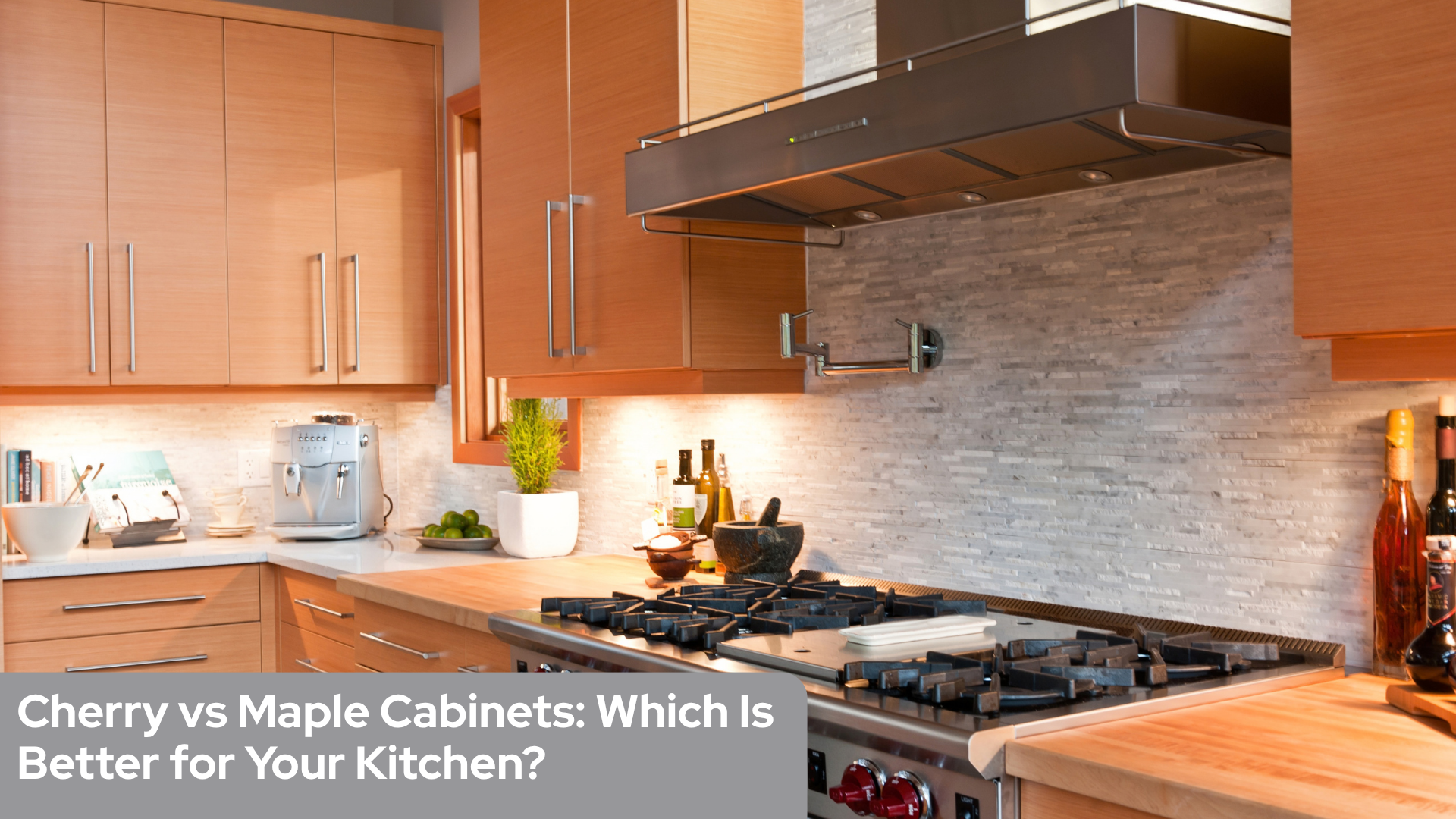
Cherry vs Maple Cabinets: Which Is Better for Your Kitchen?
Choosing a cabinet wood is about more than picking the colour you like today. The wood you choose affects how your kitchen looks, how it ages and how easily it fits with the rest of your design.
Cherry and maple are two popular options because both can create beautiful, long-lasting cabinetry. But they create very different looks.
The short answer: maple is usually the better choice if you want a lighter, more consistent appearance. Cherry is a strong option if you prefer warmer tones, visible character and a wood that develops a richer colour over time.
Here is what to consider before choosing between cherry and maple cabinets.
Cherry vs Maple Cabinets at a Glance
Cherry is known for warmth and natural character. Its colour can range from lighter reddish-brown tones to deeper, richer shades, and one of its defining characteristics is that its appearance changes as it ages and is exposed to light.
Maple tends to be lighter and more uniform. It has a subtle grain that works particularly well when the goal is a clean, refined kitchen.
Neither is automatically better. The right choice depends on the look you want and how you expect the rest of your kitchen to come together.
What Do Cherry Cabinets Look Like?
Cherry has a naturally warm appearance.
It is commonly associated with traditional kitchens, but that does not mean it has to feel old-fashioned. A simple door profile, restrained hardware and contemporary countertops can make cherry cabinetry feel surprisingly modern.
One of the biggest things to understand about cherry is that its colour changes.
Natural light and age can deepen the wood over time. That means a brand-new cherry kitchen may look somewhat different several years later.
For homeowners who appreciate natural materials developing character, that can be part of the appeal.
What Do Maple Cabinets Look Like?
Maple is generally lighter and more consistent.
Its grain is usually more subtle than cherry, which makes it a versatile material for kitchens where the cabinetry should feel clean rather than visually busy.
Maple can work well in:
- contemporary kitchens
- transitional kitchens
- traditional kitchens
- light, natural colour palettes
- painted or stained cabinetry
Its relatively uniform appearance also makes it easier to pair with a wide range of countertop, flooring and hardware choices.
Is Cherry or Maple More Durable?
Both woods can perform very well in a kitchen when the cabinetry is properly constructed, finished and installed.
Maple is a hard wood and is often selected for spaces that will see frequent everyday use. Cherry is slightly softer, meaning dents and marks may appear somewhat more readily.
That does not make cherry an unsuitable cabinet material.
Cabinet durability depends on much more than the species used for the visible components. Cabinet box construction, joinery, hardware, drawer systems, finish quality and installation all play a major role.
If durability is one of your biggest priorities, read our guide to the best cabinet materials for a durable kitchen.
Which One Shows Wear More Easily?
A lighter, relatively uniform maple finish can make some forms of wear less visually noticeable.
Cherry’s darker colour may make certain scratches or imperfections more apparent, although its natural colour variation can also help disguise minor changes.
The finish makes a major difference too.
A natural finish, stain and painted finish can all behave differently over years of use.
If you are selecting cabinetry for a busy household, do not choose based on wood species alone. Consider the finish, hardware and construction as a complete system.
Which Wood Works Better in a Modern Kitchen?
Maple is often the easier material to integrate into a modern kitchen because of its clean grain and lighter appearance.
However, cherry can work very well in contemporary design when it is used intentionally.
For example, warm cherry cabinetry paired with a simple slab-style door, understated pulls and a restrained countertop can create a modern kitchen without relying on the colder finishes sometimes associated with contemporary design.
The door profile often influences the final style just as much as the wood itself.
Explore Harbour City Kitchens’ cabinetry options when planning the complete look.
Which Is Better for a Traditional Kitchen?
Cherry has long been associated with traditional cabinetry because of its warmth, depth and natural character.
Maple can also work beautifully in a traditional space, especially when paired with detailed door profiles and warmer finishes.
If your goal is a rich, classic appearance, cherry may have an advantage.
If you want traditional cabinetry that feels lighter or less visually heavy, maple may be the stronger fit.
What About Colour Changes Over Time?
This is one of the biggest differences between the two.
Cherry tends to darken noticeably as it ages.
Maple can change too, but the effect is generally less dramatic.
That means homeowners considering cherry should think about what the cabinetry may look like in several years, not only what the sample looks like on the day it is selected.
Natural variation is part of working with real wood.
How Do Cherry and Maple Compare With Birch?
Harbour City Kitchens already has detailed resources comparing birch and maple because material choice is one of the most common decisions during cabinet planning.
If maple is on your shortlist, read our full birch vs maple cabinets comparison as well.
The best decision may come down to whether you prefer:
- the consistency of maple
- the warmth and ageing characteristics of cherry
- the natural appearance and practical benefits of birch
Should You Choose Cherry or Maple Cabinets?
Choose maple if you want a lighter, more uniform and versatile cabinet appearance.
Choose cherry if you want warmer cabinetry with more natural character and are comfortable with the wood deepening in colour over time.
But do not make the decision from a small sample alone.
Cabinetry occupies a large portion of the visual space in a kitchen. Whenever possible, look at larger samples and finished kitchens under realistic lighting.
Harbour City Kitchens’ gallery can help you compare complete spaces rather than individual materials in isolation.
Frequently Asked Questions
Is maple or cherry better for kitchen cabinets?
Both can make excellent cabinetry. Maple is typically chosen for a lighter, more uniform look, while cherry is preferred when warmth and natural colour variation are priorities.
Is cherry darker than maple?
Generally, yes. Cherry typically has warmer reddish-brown tones, while maple is naturally lighter.
Does cherry wood get darker over time?
Yes. Cherry is known for developing a deeper colour with age and exposure to light.
Is maple good for a busy kitchen?
Maple is a hard, durable wood and can be well suited to kitchens that see frequent use when properly finished and constructed.
Planning Your Cabinet Materials?
The easiest way to compare cabinetry is to see finishes, materials and complete kitchen displays together.
You can book a consultation with Harbour City Kitchens to begin planning your space.


