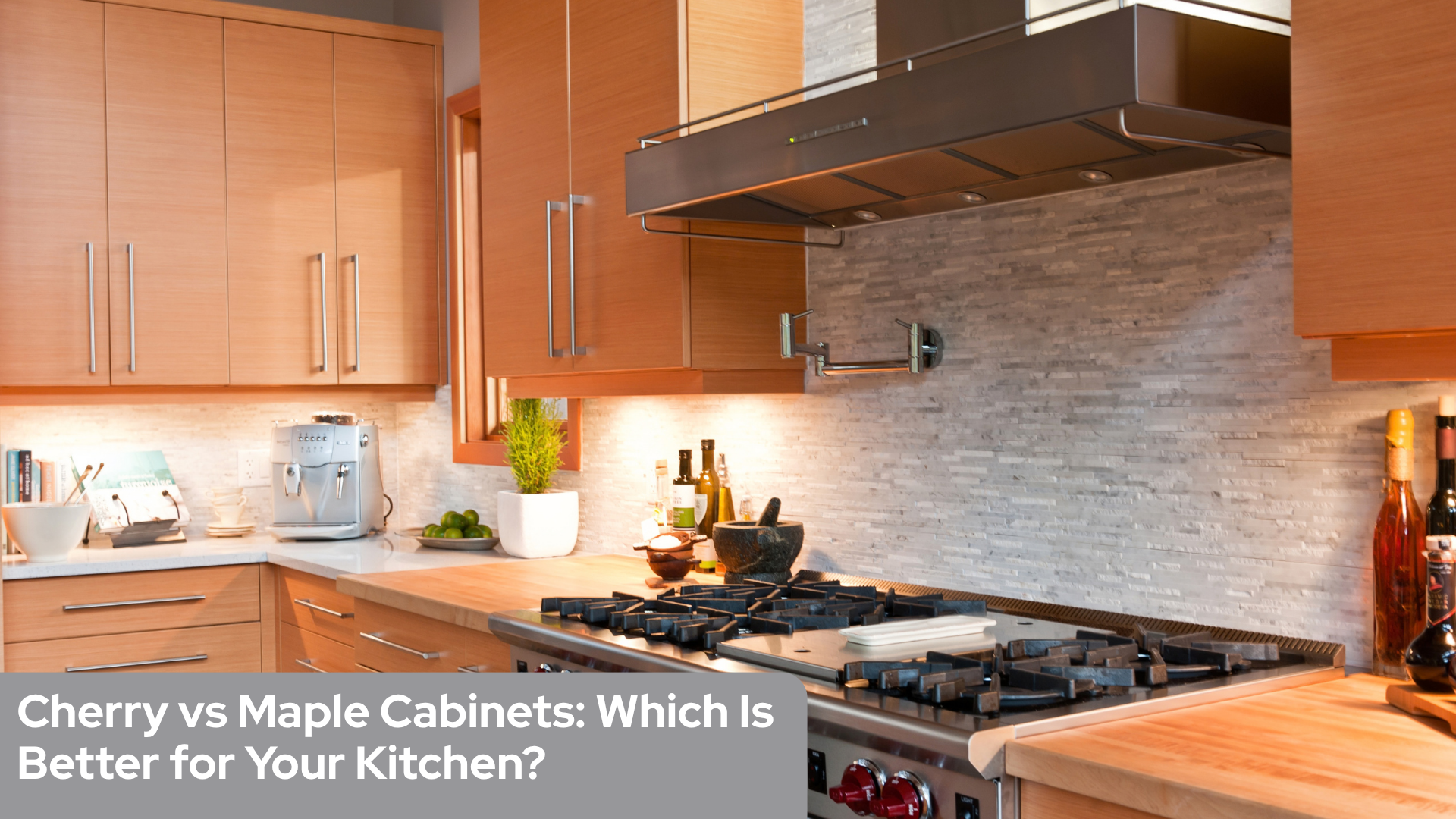
Replacing White Cabinets With Birch: What Changes and What It Costs
White kitchens dominated for the better part of two decades, and a lot of homeowners are now looking at one and feeling that it reads flat. Birch is one of the most common places that search ends, and for good reason. It brings warmth back into a room without going dark, it photographs beautifully in Vancouver Island light, and it does not carry the heaviness that oak or walnut can bring to a smaller space.
Here is what actually changes when you replace white cabinets with birch, what the material does over time, and what the project realistically involves.
Why homeowners move away from white
The reasons we hear most are consistent. White shows everything, particularly around handles, the sink, and the garbage pull-out. Painted finishes chip at the edges and touch-ups rarely match. And after a decade, an all-white kitchen often reads as belonging to a specific period rather than as timeless.
The pushback against white is not a rejection of light kitchens. It is a move toward warmth and material honesty, which is precisely what birch delivers.
What birch actually looks like in a room
Birch is a pale, fine-grained hardwood. The heartwood runs from cream through light golden brown, and the grain pattern is subtle and relatively straight, with occasional soft curl and figure. It is nothing like the heavy cathedral grain of red oak.
In practice, that means birch reads as warm and calm rather than as a statement wood. Against white quartz, it looks contemporary and Scandinavian. Against a warmer stone or a soapstone-look surface, it reads more organic and West Coast. Both directions work, and the countertop choice does more to set the mood than the cabinets do.
Our birch versus maple comparison goes deeper on grain and colour differences if you are weighing the two.
How birch ages, and why it matters more than people expect
This is the part most articles skip. Birch ambers. Exposed to daylight over the first two to three years, the surface warms and deepens, moving from pale cream toward a soft honey tone. It is a gradual, even shift and most homeowners like it.
Two things affect how much it moves. The finish matters most: oil-based finishes amber noticeably more than modern water-based conversion products. And sun exposure matters, so cabinet faces near a south-facing window will shift faster than those inside a pantry.
The practical implication is simple. If you plan to add matching cabinetry two years later, expect a visible colour difference between old and new. Build the full scope now, or accept the variation as part of the material. It is also worth asking your cabinet maker which finish system they use and how much ambering to expect from it. Our cabinet finishes guide covers the differences.
White birch as the middle path
Not everyone going from white to birch wants a full warm-wood kitchen. White birch, sometimes called paper birch, is the paler sapwood grade. It keeps a light, airy room while introducing visible grain and texture.
This is a good option in a kitchen with limited natural light, in a smaller Victoria condo or heritage home where a darker material would close the space in, or where you want the wood to sit quietly behind a bold countertop or backsplash. It also pairs well with a two-tone approach: birch on the lowers and island, painted uppers to keep the sightline light.
Can you keep your existing boxes?
This is the first question worth answering, because it changes the budget by a large multiple.
You may be able to keep them if: the boxes are plywood rather than particleboard, they are square and structurally sound, the shelves are not sagging, there is no water damage under the sink, and the layout still works for how you cook. In that case, new birch doors and drawer fronts with matching exposed panels can transform the room.
You should replace them if: the boxes are particleboard and have swelled anywhere, the interiors are dated shallow depths, the drawers are stapled and running on side-mount glides, or you want to change the layout at all. Doors on a bad box is money spent twice.
There is one thing to know about matching. Birch doors on non-birch boxes will show. The cabinet interior, the box edges, and the door will not read as one material. If the interiors will be visible, plan for birch plywood boxes as well. Our article on upgrading to birch plywood cabinets explains why the box construction matters as much as the door.
What it costs
Pricing depends far more on scope than on the wood species itself. Birch is not an expensive hardwood. It sits below maple, well below walnut, and is one of the reasons it delivers so much visual return for the money.
The cost drivers are the number of cabinets, whether boxes are being replaced or reused, the door style and finish system, hardware and interior accessories, and whether countertops and backsplash are changing at the same time. Layout changes that move plumbing or electrical add trades to the project and are usually the single biggest line item after the cabinetry itself.
For a realistic picture of what custom cabinetry runs in this market, see our breakdown of custom cabinet costs in Victoria BC.
What to decide before you start
- Full birch or two-tone. Two-tone keeps a room lighter and often costs slightly less.
- Door style. A slab or shaker profile shows birch grain best. Heavy detailing fights the wood.
- Finish system, and how much ambering you are comfortable with.
- Countertop direction, because it sets the temperature of the whole room more than the cabinets do.
- Hardware finish. Matte black and brushed brass both work with birch, and they take the room in very different directions.
- Whether the layout stays. If it changes, this is a renovation, not a cabinet swap.
Seeing real doors under real light is worth more than any rendering here. Birch samples photograph differently than they look, and ambering is impossible to judge from a screen. Browse completed projects in our gallery to see how it reads at full scale.
The bottom line
Replacing white cabinets with birch is one of the highest-impact changes you can make to a kitchen without moving a wall. The material is warm, forgiving, well suited to coastal homes, and considerably more affordable than its appearance suggests. The two decisions that matter most are whether your existing boxes are worth keeping and which finish system you use, because those determine both the budget and how the kitchen looks in five years.
Talk to Harbour City Kitchens
Harbour City Kitchens has designed and built custom cabinetry in Victoria for more than 45 years. Everything we make is built locally by our own team, for homes across Greater Victoria and Vancouver Island. Visit our showroom to see doors, finishes, and hardware in person, or book a consultation to talk through your project. You can also get in touch here.
Frequently Asked Questions
Do birch cabinets turn yellow over time?
Birch ambers rather than yellows. Over the first two to three years the surface warms from pale cream toward a soft honey tone. The finish system matters most: oil-based finishes amber noticeably more than modern water-based products. Sun exposure accelerates it, so cabinets near south-facing windows shift fastest.
Can I just replace my white cabinet doors with birch?
Sometimes. If your boxes are plywood, square, structurally sound, and the layout still works, new birch doors and fronts can work. If the boxes are particleboard, swollen, sagging, or the layout is changing, replace them. Birch doors on non-birch boxes will also show wherever the interior is visible.
Is birch more expensive than white painted cabinets?
Not usually because of the wood. Birch is an affordable hardwood, below maple in cost. Painted finishes often cost more than a clear-finished wood because of the additional prep and coating steps. Scope drives the budget far more than species does.
What countertop goes with birch cabinets?
Both directions work. A cool white or grey quartz makes birch read contemporary and Scandinavian. A warmer stone or soapstone-look surface makes it read organic and West Coast. The countertop sets the temperature of the room more than the cabinets do, so decide the two together.